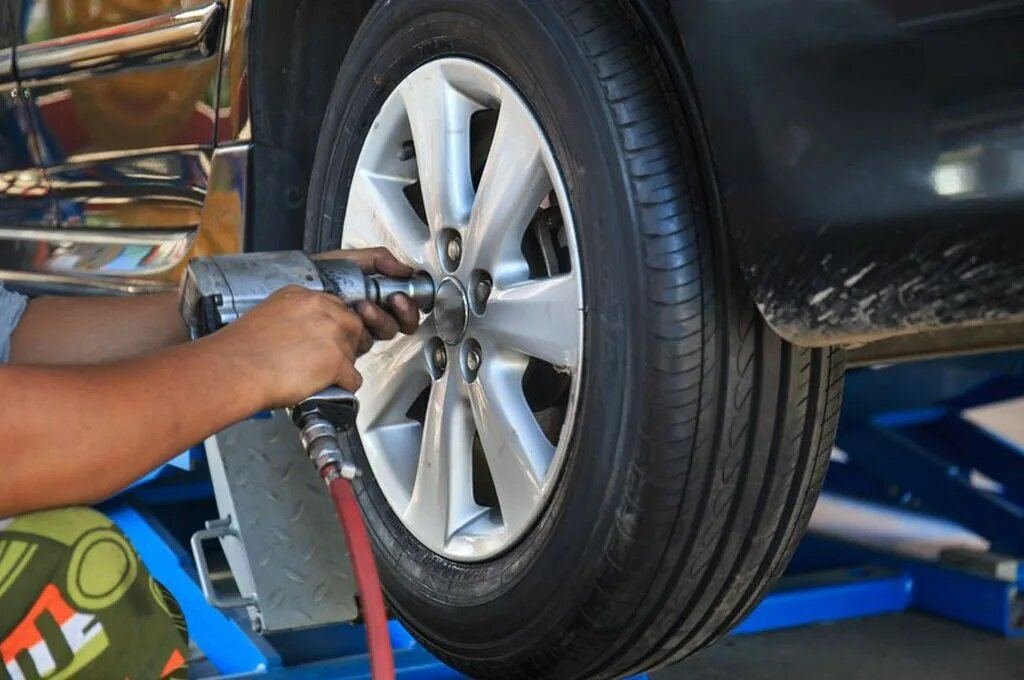
Why rotation and balancing matter more than people think
Tires wear unevenly by default. Front tires usually carry more steering and braking load, and on a front-wheel-drive vehicle they also carry the drive torque, so they wear faster than the rears if left in place. Rotating tires, moving the fronts to the back and the backs to the front in a pattern matched to your drivetrain, spreads that wear out evenly so you get more usable life from the whole set instead of replacing two tires early while the other two still have tread left. Balancing is a separate issue: a wheel and tire assembly is never perfectly uniform in weight, so small weights are clipped or stuck onto the rim to cancel out that imbalance. An unbalanced wheel shows up as a vibration through the steering wheel or seat, usually worse at highway speed, and it also accelerates uneven tread wear on its own. Because both jobs need the wheels off the vehicle, they’re almost always more efficient to do together, and we typically bundle rotation into a seasonal changeover or a balancing visit rather than pricing it as its own separate appointment.
